Showing posts with label Negro Leagues. Show all posts

Tuesday, February 23, 2021

Barrier Breakers: 1954 Curt Roberts - Pittsburgh Pirates


Curt Roberts played professional ball from 1947-1963.  He began as a shortstop for the Kansas City Monarchs. He was signed by the Braves in 1951. In 1952 he was signed by the Pirates General manager Branch Rickey. He was promoted to the Big Leagues at the beginning of the 1954 season and became their everyday second baseman and the first African American on the Bucs.  After struggling in 1955 he was sent down to the minors. He reclaimed his job in 1956 only to lose it to future Hall of Famer Bill Mazeroski.

In June of '56 he was traded to the A's as part of a three-player deal. Prior to the 1957 season he was dealt again to the Yankees as part of an eleven player swap. In all he played minor league ball for six different franchises; Braves, Pirates, A's, Yankees, Dodgers and White Sox, but he never made it back to the Majors after the 1956 season.


Friday, February 19, 2021

Barrier Breakers: John Kennedy, Philadelphia Phillies


It's been a while since I posted to this series.  The truth is I was hoping to find a better photo to use.  As it is, I colorized this black and white photo of John Kennedy and superimposed him into Connie Mack Stadium. I'm not really happy with the final product but at some point I need to quit tinkering and move on.

Although John Kennedy broke the color barrier with the Phillies, his career was brief.  He played in just five MLB games. Three times he came in as a pinch runner, twice as a defensive replacement late in the game.  In all he had just two plate appearances. He struck out and grounded out. The first black player to register a base hit with the Phillies was Tony Curry in 1960.  

It is odd that the Phillies were so late to integrate.  It may have been quite a bit different.  I had posted earlier about Bill Veeck who claimed in his 1961 autobiography that he tried to buy the Phillies in 1943.  He claimed his plan was to populate the team with top negro league players. Click Here to see that old post.

Because his career with the Phillies was so short, it was difficult to find a suitable photo. If anybody can find a better photo, I'd love to have a do-over.

Monday, December 21, 2020

Barrier Breakers: 1947 Larry Doby - Cleveland Indians


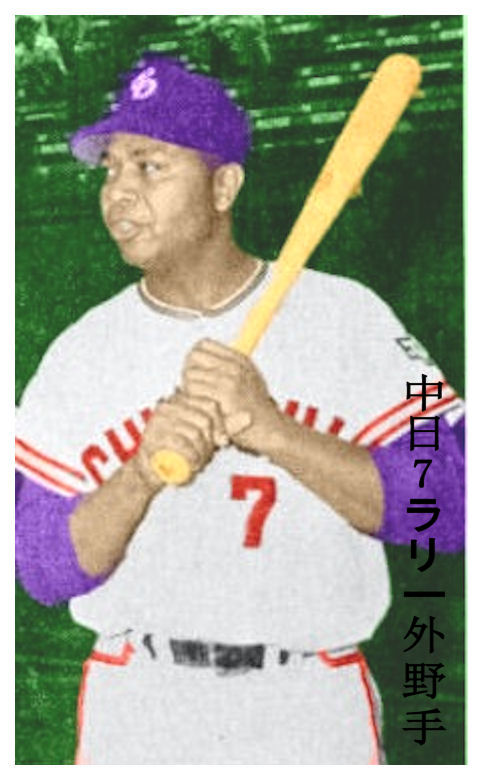
We all know Larry's story. Second to Jackie Robinson in the MLB and the second MLB manager behind Frank Robinson.  He also played in Japan in the early sixties. He has been one of my favorite subjects in this blog. I've made a few cards of him already. Here is a '55 Bowman, a 1963 Menko, an Alt-Topps MLB Dream Bracket card and a 1978 Topps manager card.  These all made appearances on my blog going back as many as 9 years.


I had floated the idea of the 1947 Bond Bread card on Twitter. Most liked it and thought it captured the era accurately.  The only complaint was the photo I had originally used.  Someone pointed out that it was already used on a  1979 TCMA card.  It actually was used by TCMA  again in 1984 and 1986.  In all, I found over a dozen cards that used that same photo, including several from Fleer and Topps. This version uses a magazine phot from that era.  I can't tell if it was colorized or just the print quality of the magazine.  At least I haven't found it on any other cards. Yet.


Thursday, December 17, 2020

Barrier Breakers: Hank Thompson - New York Giants

 Yesterday, the commissioner of Major League Baseball announced that seven of the Negro Leagues that operated between 1920 and 1948 will be considered Major League team and (I assume) their stats will be also included.  I have been making cards of Barrier Breakers as part of my latest project.  This is my latest, a 1949 Leaf card of Hank Thompson.

******************************************************


Hank Thompson was the only player who integrated two different teams.  In 1947 he was the fist Black player on the St. Louis Browns. On the Browns, he was joined on the field two days later by Hall of Famer, Willard Brown. He made his Giants debut on July 8, 1949.  He started the game at second base and was the leadoff hitter.  Monte Irvin made his Giants debut that same day.  Because he came in as a pinch-hitter in the 8th inning, Thompson technically broke the color barrier by 7 innings.


Friday, December 11, 2020

Barrier Breakers: Jackie Robinson - Brooklyn Dodgers


This is the ultimate "Barrier Breaker".  Jackie Robinson's integration into the league is well documented.  Instead of going into all of that, I want to address the hobby aspect.  I chose to make my own design of the Bond Bread card because Jackie Robinson did have several card in 1947. Those were issued by Bond Bread.


He had his own 13 card set.  The cards were distributed as a promotion with a couple slices of bread and a coupon.  There is some dispute whether this set was actually from 1947.  Some point out that the photos used were not from 1947.  It is possible that they were distributed over a few years, starting in 1947.  The cards were nearly the size of standard cards today. Instead of 2.5" X 3.5" it was 2.25" X 3.5". They were plain black and white photos and there were 3 different backs. 


I took some of the design elements found in other Bond Bread promotional art.  I wanted to capture the style of the era but wanted to incorporate color/colorized photos and a standard 2.5" x 3.5" format.  This is what I came up with.  I have already posted a Hank Thompson card in this 1947 format, and (spoiler alert) plan to use this format for the 1947 card of Larry Doby.

For more information on the REAL 1947 Bond Bread set click here.  It is very interesting with some good photos too.

Tuesday, December 1, 2020

Barrier Breakers: Ernie Banks, Chicago Cubs


January 31, 1865 the 13th Amendment abolishing slavery passed in Congress. Coincidentally, January 31st is the birthday shared by Ernie Banks and Jackie Robinson. Mr. Cub broke the color barrier for the Chicago Cubs more than 6 years after Jackie Robinson did the same for all of Major League Baseball.  The Cubs were the third NL team to integrate, and Banks was the third Negro League turned MLB player enshrined in Cooperstown behind Robinson and Monte Irvin. When he was presented with the Presidential Medal of Freedom by Barack Obama, he presented the first Black President with a bat used by Jackie Robinson. 

On and off the field, Banks was known for his friendly, joyous demeanor.  "Mr. Sunshine" was his nickname even before he became "Mr. Cub".  After his passing in 2015, Jesse Jackson described his cheerfulness as a thermostat that helped control the temperature of his times. He was beloved by fans and teammates alike. His enthusiasm was infectious. 

I also have to mention Gene Baker who was acquired by the Cubs prior to Ernie Banks but made his MLB debut 3 days later.  The two were the first black double play combo in the Majors.


Monday, November 23, 2020

Barrier Breakers: Tom Alston, St. Louis Cardinals


The integration of the Cardinals was a complicated story. First, the Cards' owner from 1947-1953, Fred Saigh, was opposed to signing any black players.  When he pled guilty to tax evasion, he was forced to sell the team to August "Gussy" Busch Jr.   Busch is credited as saying "Wow can it be the great American game, if we don't have any negro players? We've got to get colored ballplayers." That sentiment was less progressive than it was pragmatic.  He followed that up with "Hell, we sell beer to everyone."

The rest of the story is a tale of two players, Tom Alston and Len Tucker.  In 1953 the Cardinals signed Len Tucker as their first black player. Tucker was an all around college athlete at Fresno State. He was a track star, he led the Basketball team in points per game and led the baseball team in homers and RBIs.  Despite performing well in the  Cardinals minor league system but never got promoted to the bigs.  


Instead the Cardinals went with a more proven player.  They purchased Tom Alston from the San Diego Padres of the Pacific League.  They immediately experienced buyer's remorse.  Alston was two years older than they had thought and asked for $20,000 of the $100k they spent on him to be returned.

Alston was hitless in his first seven at-bats, but his first two MLB hits were both over the fence. By mid-May he was batting over .300 with 4 homers.  After that, he cooled off quite a bit. By the end of June he had the same 4 homers and an average of .246. He spent the rest of the season in the minors. He played in just 25 more MLB games over the next three seasons.

Friday, November 20, 2020

Barrier Breakers: Hank Thompson, St. Louis Browns


Hank Thompson began his career as a 17 year old outfielder for the 1943 Kansas City Monarchs. He spent the next 2 1/2 seasons in the Army.  He was a machine gunner at the Battle of the Bulge.  In 1946 he rejoined the Monarchs in the midst of a championship run.

In 1947 he and teammate, Willard Brown were signed by the St. Louis Browns.  Thompson made his field debut first on July 17th.  Two days later, Brown made his debut.  Neither player would be on the Browns after the '47 season.  Although Willard Brown played only a partial MLB season, he would be inducted into the Hall of Fame for his Negro League accomplishments in 2006.  Hank Thompson would go on to be the first black player on the New York Giants in 1949.

The card itself was an invention of mine.  Bond Bread did produce baseball cards in 1947 but they were little more than black and white photos. I took some liberties by altering some non-sports cards of theirs from that era.  I wanted a color card that was the modern standard dimensions of 2.5" x 3.5".


Wednesday, November 11, 2020

Barrier Breakers: Sam Jethroe - Boston Braves


The 1950 NL Rookie of the Year was the 33 year old centerfielder, Sam Jethroe.  I made this card despite the fact that Jethroe was relatively well represented on cardboard during his short MLB career.  He had Bowman cards in 1950-1953 and Topps cards in 1951 and 1952. Although his MLB career was just 3 years as a Brave from 1950-52 and a short stint on the Pirates in 1954, his professional baseball career spanned 18 seasons.  He played minor league ball in Toledo, Montreal and Toronto. He also played Negro League ball in Indianapolis, Cincinnati and Cleveland.


As I said, Jethroe already had a card in the 1950 Bowman set.  So the card itself is a creation of my own based on the 1950 Drake TV Baseball Series. The Drake Cookie cards were a black and white tv card similar to the 1955 Bowman cards and measured 2.5" by 2.5". The 1950 Bowman measured 2 1/16" by 2 1/2".


 I wanted a more standard 2 1/2" by 3 1/2", color card. So I modeled it on the huge console TVs of that era. The screens were actually more rounded and small compared to the piece of furniture that housed them.


Monday, November 9, 2020

Barrier Breakers: Bob Trice - Philadelphia Athletics


My new project is to create cards of each MLB team's first black player.  Some are well known  superstars others are not as well known. I will be posting these in alphabetical order by team, starting with the Athletics, ending with Yankees.  There are just 16 teams as by the 1961 expansion all teams had integrated to a degree.  The cards themselves will be from the year of their first MLB appearance.  This will require me to take a little artistic license.  I will re-imagining certain cards that are pre-Topps/Bowman/Leaf.

Bob Trice was a September call up in 1953.  By that time he had already won 21 games for the Ottawa A's.  He won 2 of his 3 starts for the major league A's in 1953. A former member of the Homestead Grays, he would only play 3 MLB seasons all for the Athletics, two in Philly and one in Kansas City. 

Thursday, April 23, 2020

MLB Dream Bracket Alt-Topps Cards Part 5

Indians v Negro League Legends


Spoiler alert:
*********************************

The biggest disappointment in the Dream Bracket so far (besides the non-existent graphics) was the early exit of the Negro League Stars.  In an apparent lack of pitching on either side, the Tribe outscored the Negro League 52-36 in a series that went all seven games. You can read the recap here or see the video here

I was disappointed because I wanted  them to go deep into the bracket. I wanted to see how the Negro League Legends stacked up against other teams as well. Maybe a round-robin type of series would have been better for this. Anyway, This whole thing could have been improved by better graphics like MLB The Show and/or a different form of bracket that wouldn't be a one and done situation.  

Just my thoughts on this imaginary series of games. Now lets get to the imaginary cards!

For the  Indians we have Bob Feller, Nap Lajoie, Lou Boudreau and Larry Doby.


For the Negro League Legends I could not just do 4 cards.  I decided to make four pitcher cards, the full line-up of position players including the DH and three of the reserves.  On a side note, I know that I am missing perhaps the most famous Negro League pitcher, but there are so many cards of Satchel Paige compared to his contemporaries. Also I decided to go with black and white photos rather than an amateurish attempt at colorization. Plus with 16 cards that's a ton of work. 

Here are the four pitchers: Bill Foster, Hilton Smith, Leon Day and Smokey Joe Williams.


Here are the position players: Josh Gibson C, Buck Leonard 1B, Newt Allen 2B, Ray Dandridge 3B, Pop Lloyd SS, Turkey Stearnes LF, Oscar Charlseton CF and Cool Papa Bell RF.


The designated hitter is Mule Suttles. On the bench is Martin Dihigo, Monte Irvin and Biz Mackey.


  It also goes without say that this is the All-Time great nickname team.  Mule, Turkey, Biz, Buck, Pop, Smokey and of course Cool Papa.


******************************************

These cards are base on the MLB Dream Bracket.  Not sure who picked the "all-time players". It is a product of Twitch, Out of the Park and Draft Kings.  I take no responsibility for their choices, good or bad.  The cards themselves are based on a rejected Topps design from the late sixties.

To check the status of the bracket click here.

Tuesday, August 26, 2014

The 1943 Phillies Team That Never Was

Cleaning Out the Closet: 
Part 2 - Abandoned Projects

Been a bit busy lately and haven't had the time to post anything new so here are some more cards rescued from the junk files. This is another example of an overly ambitious project.

I got the idea from an article I read about Bill Veeck. He claimed in his autobiography that in 1943 he attempted to buy the Phillies. He planned to make a team using the great Negro League players from the era. This would have predated Jackie Robinson's debut by several years. The league was being drained of its talent due to World War II. Still many talented players were not considered because of their skin color.  Now there is no historical evidence of this alleged plan other than Veeck's word for it many years after the fact. But it makes you think. How would this have changed history. Would a team stacked with Negro League greats dominate in a league with many of its players engaged in the war effort?


This project presented a few problems. Among them, I would have to find pictures of the players. These are fairly few and far between. Next I would have to photoshop them into Phillies uniforms. And the biggest hurdle was that there were no cards issued in that era. I would need to create a card that looked like it came from 1943.


Once again, it just proved too much for me. I really liked the idea and I think the cards that I made looked pretty cool. Unfortunately, I just couldn't find enough suitable pictures of relevant players. I've actually held onto this project for quite some time in hopes of reviving it, but I guess it's time to put it to rest.


Sunday, July 10, 2011

1962 Topps Buck O"Neil


Buck O'Neil was the first black coach in the majors as a member of the infamous Chicago Cubs "College of Coaches".  He is credited with bringing Lou Brock to the Cubs as a scout. He also managed the Kansas City Monarchs of the Negro Leagues from 1948-1955.

Saturday, July 2, 2011

1952 Topps Henry Aaron


There are virtually no Negro League cards so that leaves plenty of opportunities to create my own. This is my first attempt at colorizing black and white photos and it is more than a bit rough. 

Hank Aaron spent about 3 months playing for the Indianapolis Clowns in 1952 before being offered contracts from both the New York Giants and the Boston Braves. He chose the Braves because they offered $50 more per month.